
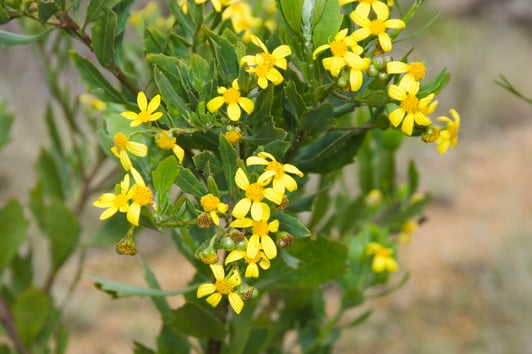
Boneseed (Chrysanthemoides monilifera ssp. monilifera) is a large perennial shrub and an environmental weed that has the potential to threaten natural ecosystems and spread throughout the south-west and surrounding areas if allowed to establish.
Boneseed is a declared pest in Western Australia and must be reported to DPIRD if found.
Landholders are obligated under the Biosecurity and Agriculture Management Act to report any boneseed finds on their properties and undertake relevant controls and to continue regular monitoring until it has been extirpated or eradicated.
By reporting suspected boneseed, landholders and other observers are contributing to a wider effort to assist with eradication of the pest from WA.
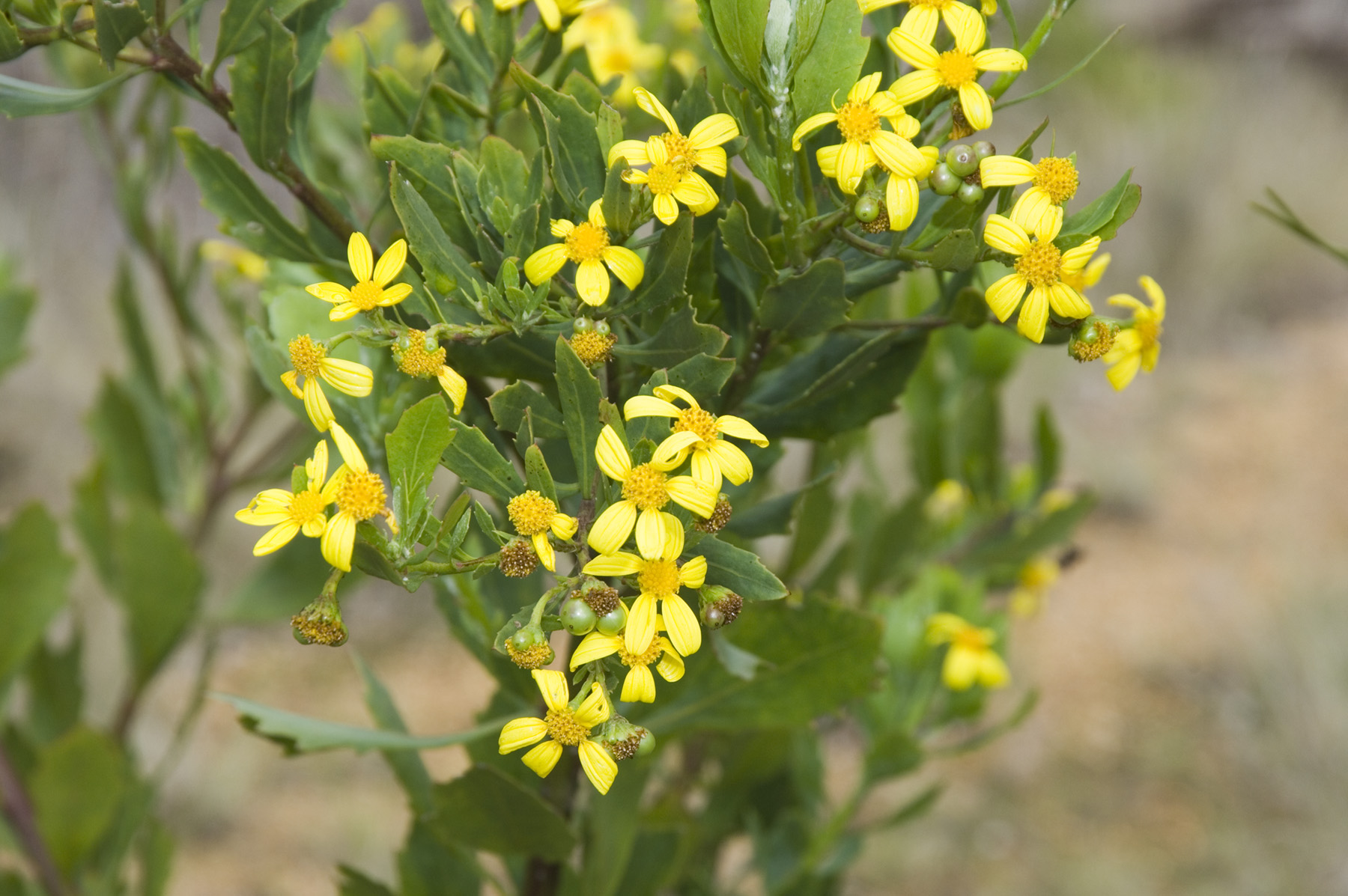
What to look for
- large perennial evergreen shrub up to 3 metres high, erect and densely branched
- bright yellow flower clusters appear August to October on branch tips of large shrubs, daisy-like with 4 to 8 petals (can be up to 13)
- leaves are dull green, smooth, irregularly serrated
and paddle-shaped with tufts of cottony-down on
new growth - fruit are round, fleshy berries in clusters of up to 8, appearing during September to November, ripening green to black and contain one seed
- seeds are smooth, very hard (bone-like), germinates mainly in autumn if adequate soil moisture is present
- may also be confused with flowering native buttercups, bitou bush, native boobialla, African veldt daisy and flax-leaf broom bush.
Key points
- If found, report it.
- Seedlings are shallow-rooted and easily hand-pulled, mature plants can be dug up.
- Collect and bag-up any fruit or seeds (on plant or ground) for disposal.
- Movement is prohibited. Leave weeded plants to die where found to prevent spread.