
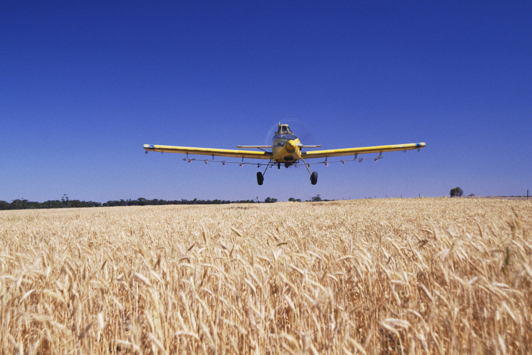
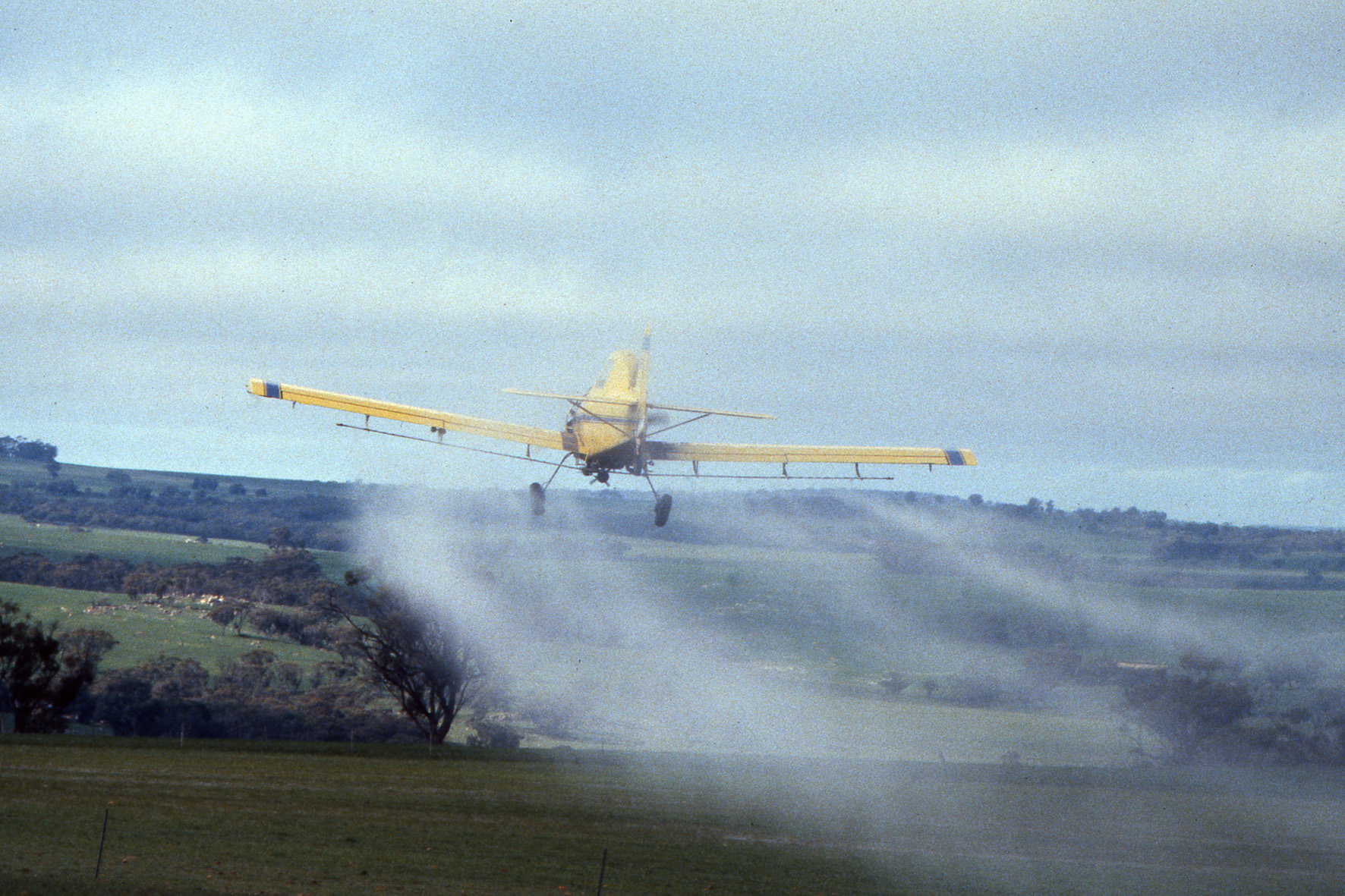
Regulations for the aerial application of agricultural chemical products are necessary to maximise crop production while managing the risks associated with chemical application.
The Biosecurity and Agriculture Management (Aerial Application) Regulations 2018 establish chemical training qualifications and record keeping requirements for persons applying agricultural chemical products from aircraft.
What these regulations cover
The Biosecurity and Agriculture Management (Aerial Application) Regulations 2018 regulates:
- training and competency requirements for aerial applicators
- record keeping requirements for aerial chemical application.
Other requirements relating to aircraft operations, aviation safety and compliance with pesticide label directions, off-target damage are regulated by other agencies under separate legislation.
The regulations aim to ensure that aerial applicators are appropriately trained and maintain records of aerial chemical applications. Regulation outcomes include:
- awareness of the need to use chemicals safely and responsibly for both piloted and remotely piloted aircraft.
- users become competent in the aerial application of agricultural chemicals and can demonstrate competency through training.
- national training competencies, or equivalent, reflect the required management of agricultural chemical risk.
A person must not apply an agricultural chemical product from an aircraft unless they have the qualifications prescribed by the regulations or an approved equivalent.
Biosecurity and Agriculture Management (Aerial Application) Regulations 2018Training requirements
A principal requirement of the regulations is that persons conducting aerial application of agricultural chemical products hold prescribed qualifications or approved equivalent training.
The qualification required for both piloted and remotely piloted aircraft is the Aerial Application Association of Australia Spraysafe Pilot Accreditation or equivalent.
Equivalent training includes the following competencies:
- AHCCHM303 Prepare and apply chemicals or AHCCHM307 Prepare and apply chemicals to control pest, weeds and diseases
- AHCCHM304 Transport and store chemicals
- AHCPMG301 Control weeds
- AHCPMG302 Control plant pests, diseases and disorders
- AHCCHM404 Develop procedures to minimise risks in the use of chemicals
- AHCCHM405 Plan and implement a chemical use program.
An exception to the requirement for the Spraysafe Agricultural Pilot qualification (or equivalent), is for a landowner, who owns a remotely piloted aircraft (up to 150 kg) and only operates it over their own land without remuneration.
In this case, the remote pilot will require the following units of competency:
- AHCCHM303 Prepare and apply chemicals or AHCCHM307 Prepare and apply chemicals to control pest, weeds and diseases
- AHCCHM304 Transport and store chemicals.
The Director General may issue an authorisation for a class of persons to apply a specified agricultural chemical product from an aircraft, exempting that class of persons from the training requirements of the regulations (for example registered 1080 meat baits).
Record keeping requirements
In addition to meeting training requirements, the regulations require aerial applicators to make and retain records for each agricultural chemical application. The following information must be recorded for every application:
- date and time the product was applied
- name and address of the person who applied the product
- name and address of the owner or occupier of the land to which the product was applied
- total area of the land on which the product was applied
- location of the land
- estimated wind speed and direction at the time of application
- name of the product applied
- quantity and concentration of agricultural chemicals applied per hectare
- application equipment used
- type of crop to which the product was applied.
Records must be completed within 48 hours of the application, may be kept in either written or electronic form, must be retained for a minimum of three years, and must be made available for inspection upon request by an inspector.
Requirements outside these regulations
The Biosecurity and Agriculture Management (Aerial Application) Regulations 2018 do not regulate all aspects of aerial spraying operations. Operators, pilots and remote pilots must also comply with other applicable requirements, including:
- Civil Aviation Safety Authority (CASA) aviation requirements
- agricultural chemical product label directions
- relevant workplace health and safety obligations
- any other applicable commonwealth or state legislation.